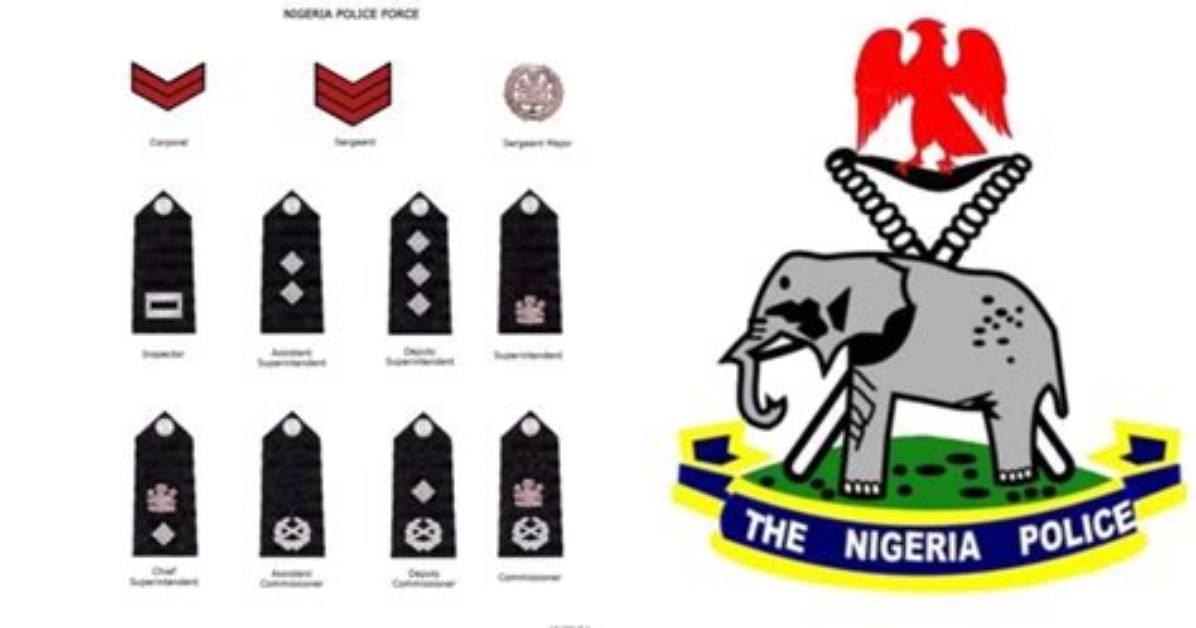
The structure of police ranks in Nigeria is essential for understanding the law enforcement system in the country. With a complex hierarchy, each rank has specific responsibilities and functions, playing a crucial role in maintaining law and order. This article delves deep into the various police ranks in Nigeria, providing insight into their duties, the recruitment process, and the overall policing system in the country.
The Nigerian Police Force (NPF) is the principal law enforcement agency in Nigeria, tasked with ensuring public safety and enforcing the law. Established in 1930, the NPF has evolved over the decades, adapting to the changing needs of society. Understanding the ranks within this organization not only helps civilians respect the authority but also aids in comprehending how law enforcement operates at different levels.
This article will explore the different police ranks in Nigeria, from the lowest to the highest, outlining their roles and significance. We will also examine the recruitment process, promotion criteria, and the challenges faced by the police force. By the end of this article, readers will have a thorough understanding of police ranks in Nigeria and their implications for public safety.
Overview of Police Ranks in Nigeria
The Nigerian Police Force operates under a well-defined hierarchy. Each rank has specific responsibilities that contribute to the overall mission of the force. The following is a breakdown of the police ranks in Nigeria:
| Rank | Abbreviation | Responsibilities |
|---|---|---|
| Inspector General of Police | IGP | Overall head of the police force. |
| Deputy Inspector General of Police | DIG | Assists the IGP in managing the police force. |
| Assistant Inspector General of Police | AIG | Oversees specific zones or regions. |
| Commissioner of Police | CP | In charge of a state or large unit. |
| Deputy Commissioner of Police | DCP | Assists the CP in managing police operations. |
| Assistant Commissioner of Police | ACP | Supervises specific departments. |
| Chief Superintendent of Police | CSP | Manages police divisions. |
| Superintendent of Police | SP | Leads police units. |
| Deputy Superintendent of Police | DSP | Assists the SP in unit management. |
| Assistant Superintendent of Police | ASP | Entry-level management position. |
| Inspector | INS | Oversees constables and investigations. |
| Sergeant | SGT | Supervises constables. |
| Corporal | CPL | Assists sergeants in their duties. |
| Constable | CPL | Entry-level rank in the police force. |
Lower Ranks in the Nigerian Police
The lower ranks in the Nigerian Police Force primarily consist of the Constable, Corporal, and Sergeant. These ranks are crucial as they form the backbone of the police force, executing daily law enforcement duties.
Constable
The Constable is the entry-level rank in the Nigerian Police Force. Responsibilities include patrolling, responding to calls, and assisting higher-ranking officers. They are often the first point of contact for the public.
Corporal
The Corporal assists the Sergeant in supervising Constables. They may also take on more responsibilities, including leading small units during operations.
Sergeant
Sergeants oversee the daily activities of Constables and Corporals. They ensure that operations are conducted effectively and report on their team’s performance to higher ranks.

